Monday, October 24, 2011

Dunedin -Larnach Castle,Sandfly Bay & Baldwin Street

Labour Day is celebrated on the 4th Monday of October, so that it would be a Mondayrised public holiday.

We did not really get to see Dunedin much as the weekend when we were there, it was their Labour long weekend. Most or should I say, all the shops were closed. Except for restaurants, the city was kind of quiet. We walked around this main shopping belt, practically window shopping.


barely any traffic on the road


Taking the light traffic situation, we decided to drive over to Dunedin penisula to see the only castle in Australasia.

Driving up the hilly & windy lane to Larnach castle is scary due to the steep narrow road, barely wide enough for 2 vehicles. My salutes to HB and his driving skill. If it was me, I definitely would have detour and play safe.

Larnach Castle, built in 1871 by Mr william James Mudie Larnach , a banker of Scottish descent. This is the only castle in NZ.
Entry to the castle & ground = NZ$27.00/pax
Entry to the castle's ground only = NZ$12.50/pax

We have seen castles/palaces in Europe, decided only to tour the ground/garden.

Anyway, in case we changed our mind, we can always pay the difference to view the castle interiors.


Was given a brochure, where informative details were given about the garden and its' plants/flowers.


suggested route to view/tour the garden


view of the bay


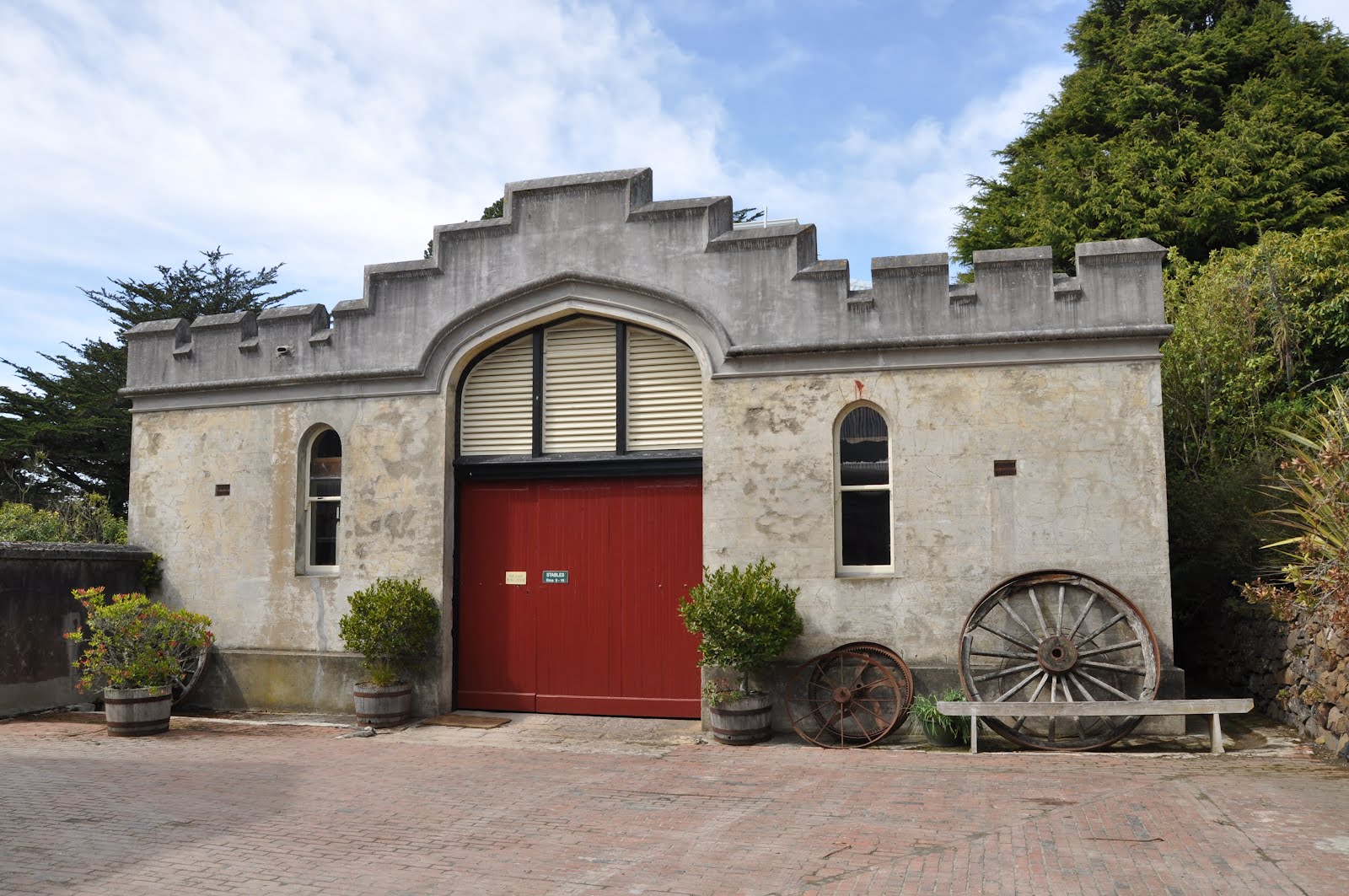
converted old stable into accommodation.


front facade of the Castle


The garden was in full bloom..pictures can be found in 'Colours of Spring'.


We continued on to Sandfly Bay, hoping to see some seals in action.

Afer hiking down about 30minutes (and chasing goats as well as stepping on their 'droppings'), we arrrived to an deserted beach and the roaring ocean.


The wildlife only comes out to play during dusk :-(
this sand dune is caused by the strong ocean wind that carry the fine particles inland. The dune is about 200m inland and still growing.

these boys are going sand-surfing

these rocks have names, but cannot recalled them :-(

fresh dung


So up we went back the same trail, with sands in our shoes and dungs in my soles


I did the most unthinkable and unmentionable thing here in the bush, the wind was blowing, I was darn urgnet and there was none to be found.


When you are in Dunedin, the must see is BALDWIN STREET


According http://www.dunedin.nz.com/baldwin-street.aspx
This street is recognised by the Guinness Book of Records as the steepest street in the world. The street runs up the northern side of Signal Hill, a prominent hill overlooking Otago Harbour, at slopes of up to 1:2.86 (for 2.86m horizontal distance, a rise of 1m).
The steepness was unintentional; grids were laid out by surveyor Charles Kettle without proper regard for the terrain.


There are a couple of annual events held at Baldwin street, one being the Jaffa Race at the annual Cadbury Chocolate Carnival, where 30,000 Giant Jaffas, hard orange candies with a chocolate centre, are rolled down the street.


Another major event is the Baldwin Street Gutbuster, a race to the top and back down again.


If that sounds too much, walk up in your own time. It takes about ten minutes, just to walk about 350 metres! But don't worry, there's a drinking fountain at the top.

it's recorded and recognised


emm..tat would be more than 45deg angle


No, did not take the route up the road just to enjoy the free water fountain. Was just happy to look, gawk and enjoy the road from mine end of it.

Dunedin Railway Building

Dunedin Railway Building has a long history. Built in 1906, at a cost of 40,000pounds, it was the country's busiest station during the earlier years.

Only a handful of trains are used today due to the reduction of rail transport.

Dunedin Railway Station is served by daily sightseeing trains to Middlemarch or Pukerangi via the Taieri Gorge, and to Palmerston.


Interior of Dunedin's most photographed building


Sunday, October 23, 2011

LEITH TOURING PARK - DUNEDIN

I was quite apprehensive when booking this place initially as it was located some distance out of town and not much info was available. Nevertheless with the good ratings from tripadvisor, I took the chance and went ahead. Glad I did so as our little timber cabin was lovely and very cosy. Situated right next to the stream and wood, we could hear the birds chirping and stream gurgling by when having breakfasts with hot coffee out on the veranda. Oh, yes, we spent only 10 minutes breakfast outside on the first day and rush into the cosy warmth of our cabin...cold crisp chilly wind brrrrrrrrrr..

As like every holiday park, there are different types of accommodation to suit every budget. While we were there, the World Cup Rugby final was played. A busload of high school students had their camping activities here and they definitely make themselves heard loud and clear when the Kiwis won the cup.


Some photos on our Dunedin accommodation.


Basic cabin for 4 persons


the cabin we stayed - No 7


cosy settee


comfy bed/mattress


full kitchen facilities


wardrobe, flat screen TV and heater


view from the kitchen window


the stream next to our cabin

Dunedin-Otago

The road to Dunedin was like a roller coaster, going upwards and then downwards due to the undulated terrain situation. After driving for about 4 hours, we arrived in the town centre at almost 2pm.


Entering the town, speed limit is 50km


Tummies growling for food, we went hunting for late lunch


Popped into the Craic Irish Tavern in the Octagon. HB ordered antipasto set at NZ$36.00/set. Emmm..definitely not to my palate.


Giving ourselves some exercise, we walked around the area nearby Octagon. It was Sunday, traffic was minimal and best part - PARKING WAS FREE...


The 1st church of Otago, built in 1848.


Plaque inside the church, in dedication to Rev Thomas Burns.


The first bell of Dunedin, whom also double up as the 'alarm clock' of the town during the early days.


One of the first & earliest hotels in Dunedin. When this hotel was built in 1884, it was situated beside the harbour. Now the surronding areas has been reclaimed from Bell Hill's rocks. With 150 bedrooms, the Leviathan was then reputed to be the largest hotel in Australasia. The name Leviathan originates from the book of Revelation in the Bible and is used to describe a huge creature usually of the sea.


On the 3rd floor, it was reputed there is a ghost of an unknown lady. Spooky..


Public demonstrating against the current government by camping at the Octagon.


The police and fire engine were there, just to monitor the situation.


One of the most photographed buildings of Dunedin.


The Railway Station.

Feeling tired, we went looking for our accommodation.


Leith Holiday Park.

New Zealand - All Blacks

Watched the final of the World Rugby Cup ,.
Although I know next to nothing about rugby and their rules. definitely was interesting to watch those hunks defending and ramming each other..!

Yaya...All Blacks Won!!! Tight at 8-7..still victory !!!


All Blacks table lamp in our room
At Dunedin

The Haka! It is the pre game Maori War Dance done by the "All Blacks", the New Zealand Rugby Team!

The All Blacks perform the haka with precision and intensity which underpin the All Black approach.

The words go as...

Ringa pakia
Uma tiraha
Turi whatia
Hope whai ake
Waewae takahia kia kino

Ka mate, Ka mate! Ka ora, Ka ora!
Tenei te tangata puhuruhuru
Nana i tiki mai whakawhiti te ra!
A hupane, kaupane
A hupane, kaupane whiti te ra!
Hi!

Translation

Slap the hands against the thighs
Puff out the chest
Bend the knees
Let the hip follow
Stamp the feet as hard as you can!

It is death! It is death!
It is life! It is life!
This is the hairy person
Who caused the sun to shine
Keep abreast! Keep abreast
The rank! Hold fast!
Into the sun that shines!

Haka Origin

According to Maori ethos, Tama-nui-to-ra, the Sun God, had two wives, Hine-raumati, the Summer maid, and Hine takurua, the Winter maid. The child born to him and Hine-raumati was Tane-rore, who is credited with the origin of the dance. Tane-rore is the trembling of the air as seen on the hot days of summer, and represented by the quivering of the hands in the dance.

Haka is the generic name for all Maori dance. Today, haka is defined as that part of the Maori dance repertoire where the men are to the fore with the women lending vocal support in the rear. Most haka seen today are haka taparahi, haka without weapons.

More than any aspect of Maori culture, this complex dance is an expression of the passion, vigour and identity of the race. Haka is not merely a past time of the Maori but was also a custom of high social importance in the welcoming and entertainment of visitors. Tribal reputation rose and fell on their ability to perform the haka (Hamana Mahuika).

Haka reflected the concerns and issues of the time, of defiance and protest, of factual occurrences and events at any given time

Moeraki Boulders at Koekohe Beach

After leaving Olive Grove, drove to Koekohe Beach to see the Moeraki Boulders.


The Moeraki Boulders are unusually large and spherical boulders lying along a stretch of Koekohe Beach on the wave cut Otago coast of New Zealand between Moeraki and Hampden

Parked at the designated area, and had to walk quite a distance


HB going thru a rickety make shift 'bridge'


Source : Wikipedia
Local Māori legends explained the boulders as the remains of eel baskets, calabashes, and kumara washed ashore from the wreck of an Arai-te-uru, a large sailing canoe. This legend tells of the rocky shoals that extend seaward from Shag Point as being the petrified hull of this wreck and a nearby rocky promontory as being the body of the canoe's captain. In 1848 W.B.D. Mantell sketched the beach and its boulders, more numerous than now.


The Moeraki Boulders are concretions created by the cementation of the Paleocene mudstone of the Moeraki Formation, from which they have been exhumed by coastal erosion.
The main body of the boulders started forming in what was then marine mud, near the surface of the Paleocene sea floor. This is demonstrated by studies of their composition; specifically the magnesium and iron content, and stable isotopes of oxygen and carbon. Their spherical shape indicates that the source of calcium was mass diffusion, as opposed to fluid flow.


The larger boulders, 2 metres (6.6 feet) in diameter, are estimated to have taken 4 to 5.5 million years to grow while 10 to 50 metres (33 to 165 feet) of marine mud accumulated on the seafloor above them. After the concretions formed, large cracks known as septaria formed in them. Brown calcite, yellow calcite, and small amounts of dolomite and quartz progressively filled these cracks when a drop in sea level allowed fresh groundwater to flow through the mudstone enclosing them


a cracked boulder, noticed the septaria linings


To me, they looked like some aliens eggs..anytime I expect them to burst open


and some cutey ET babies would come wriggling out

this show clearly the size of these boulders


these boulders are more inland and slowly being eroded/exposed by the waves and wind


We left as the high tides came rolling in, so that our 'makeshift' bridge would still be passable.

And off we went to Dunedin, where Willy Wonka has his chocolate factory.